
Legal | Tax | Compliance
Legal | Tax | Compliance
The Federal Administrative Court upheld the ban on Aldi Suisse AG registering the word and figurative mark «I COLORI DEL SAPORE» (fig.) in Switzerland.
In its decision of October 23, 2025 (B-2457/2024),the Swiss Federal Administrative Court upheld the decision of the Swiss FederalInstitute of Intellectual Property (IPI), concluding that there is a likelihoodof confusion between the word and figurative mark «I COLORI DEL SAPORE (fig.)»of Aldi Suisse AG (the «Appellant») and the Italian national flag, and that thetrademark violated the Swiss Coat of Arms Protection Act (CAPA).
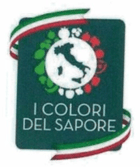
Illustration: «I COLORI DEL SAPORE»
The Appellant applied for registration of the word and figurative mark «I COLORI DEL SAPORE (fig.)» for various food products and products from agriculture, horticulture, aquaculture, and forestry in classes 29, 30, and 31. In its decision of March 5, 2024, the IPI rejected the trademark application for all the goods claimed. The Appellant then filed an appeal with the Federal Administrative Court.
According to Art. 15 para. 1 CAPA, coats of arms, flags and other foreign state emblems or signs that could be confused with them, as well as national figurative and word marks, are in principle reserved for the respective state. However, the entitled public body may authorize third parties to use its signs (Art. 16 para. 1 CAPA). Authorization is deemed to have been granted in particular by proof of an identical registration of the sign as a trademark by means of a corresponding registration certificate from the competent foreign authority or any other proof from the competent foreign authority authorizing the use or registration of the sign as a trademark (Art. 16 para. 2 CAPA). A sign whose use is prohibited under Art. 15 CAPA may not be registered as a trademark (Art. 17 CAPA). In addition, Art. 6ter of the Paris Convention for the Protection of Industrial Property (PCIP) provides for minimum protection for the corresponding national emblems of the member countries.
The Federal Administrative Court clarified in this regard that Swiss trademark law provides particularly extensive protection for foreign state emblems. Not only identical adoptions, but also purely decorative uses of a protected symbol are inadmissible if they give the impression of a foreign state emblem.
The Federal Administrative Court held that the combination of the colors green, white, and red, as well as the proportions of the flag band or banderole (in terms of stripe width), were identical to those of the Italian national flag, making the sign element confusingly similar to the Italian national flag. The additional references to Italy contained in the sign, such as the boot shape and the vertical coloring of the vegetables and fruits depicted around the «boot» in the colors of the Italian tricolor, create a clear association with the Italian national flag. The Federal Administrative Court therefore concluded that the trademark «I COLORI DEL SAPORE (fig.)» uses the Italian coat of arms as a component and is confusingly similar to it. The horizontal arrangement of the colors is not sufficient to rule out a likelihood of confusion.
The Appellant argued that the European Union Intellectual Property Office (EUIPO) should be regarded as another «competent foreign authority» under Art. 16 para. 2 let. a CAPA, which is authorized to grant authorization for the use of national emblems. Therefore, the registration practice in the «country of origin» Italy alone could not be taken into account. However, the Federal Administrative Court ruled that the registration of «I COLORI DEL SAPORE (fig.)» as a European Union trademark by the EUIPO alone did not constitute authorization within the meaning of the Swiss Coat of Arms Protection Act. Such authorization for use could only be granted by Italy as a sovereign state, whereby the trademark had to be registered with the Italian Patent and Trademark Office (Ufficio Italiano Brevetti e Marchi, UIBM). In this respect, Switzerland was not bound by the less stringent European practice.
The Appellant also invoked the principle of equal treatment (Art. 8 para. 1 of the Federal Constitution of the Swiss Confederation) and based its argument on trademark registrations that the IPI had accepted in recent years with more or less modified coats of arms or references to coats of arms. The Federal Administrative Court denied a claim to equal treatment in law because earlier registrations either had valid authorizations for use under Art. 16 CAPA or, as individual cases, did not constitute a consistent unlawful practice on the part of the IPI which would exceptionally entitle the Appellant to equal treatment.
The Federal Administrative Court’s ruling highlights Switzerland's strict stance on the protection of foreign state emblems in trademark law. Companies wishing to use national symbols or colors must be aware that even purely decorative uses of protected signs cannot obtain trademark protection, even if the trademark is already protected abroad.
Click here to learn more about our expertise:


